Skybound's The Phantom of the Opera

LordGigaIce

Another babka?
Citizen
And the managers. And Carlotta. And surely the police were given some idea what they were there to do. Quite a few people understand that the opening night of Don Juan Triumphant is a sting to catch some crazy stalker who has eyes for Christine, and then somebody grabs her mid performance and she's never seen again until Raoul and Christine are seen again. ALW, why?
I think ALW liked the idea of an older Raoul reminiscing about his departed wife and using that as a framing device. It certainly feels more dramatic than a pudgy journalist uncovering the mystery. Thing is that prologue really only has the auctioneer to go "sold to the Vicomte de Chagny" and Raoul's little bit of dialogue to indicate this old guy is Raoul.

Ideally if you wanted to keep the structure of the musical mostly the same but preserve the original ending you have Raoul, after decades of living like a peasant in obscurity with his wife, return to Paris following Christine's death so he can retrieve the music box from the Opera's public auction in her memory. Hell, a plot of the prologue is that the Opera's knickknacks are being sold on the super cheap so Raoul can easily afford that even after forsaking his wealth and living most of his life as a peasant somewhere.

Problem is that would be a bit more involved to explain. It's certainly possible, and the more I think about it the more I like it and think it could work, but I think ALW just defaulted to the easier "he's still around as the Vicomte" setup. It's quick and easy. Which, as I said, robs Raoul of his big heroic moment. His willingness to sacrifice everything to be with Christine.

It also undermines one of the book's undercurrents, which is that Raoul and Christine were always going to have problems pursuing a relationship even if Erik's crazy ass never got involved. Raoul's a noble and Christine's the daughter of Swedish peasant folk who has the lowly career of performer. It adds a layer of tension to everything that makes their eventual marriage in obscurity feel extra rewarding if you're invested in their relationship working out.

But if hey he could always marry her and give her his noble status and never had to sacrifice anything THAT'S ROMANTIC TOO I GUESS

Oh well. I should just be happy ALW got as much right as he did. I genuinely enjoy book Raoul and Christine's backstory and relationship, and the ALW show is one of the more accurate adaptations of their deal. Hell, some adaptations just don't have Raoul at all.

As an aside... I always wondered how the Paris Opera sold Don Juan Triumphant to the public.
"Come see this opera you've never heard of. It was written by a crazy man who lives in our basement. If you don't come see it, he'll kill us all."

Coward's is truly unabridged. There are others that claim to be unabridged, but they're not. I don't know why this book gets treated like this.
Best as I can tell, the newspaper that originally published the story in serial form misnumbered a few chapters. And then Leroux decided to condense some stuff when it came time for publication. And there were a few different publication runs early on, with Leroux pulling a George Lucas and deciding he didn't like how he condensed it last time, no now this is the definitive version.
Which meant between the original serial publication and a few versions of Leroux chopping it down, there were multiple French versions. The de Mattos translation, which is the one that's been the dominant version in the English speaking world, was done off of one of these abridged versions and it just took until the 2010s for someone to notice 😭

Still, I find it funny that thanks to David Coward, we have Phantom of the Opera DLC before we got GTA VI.

For all the flaws, Les Miserables definitely took advantage of the ability to do some things the stage show can't. That's been a while ago though. I don't know if current musicals really have a big enough sample size to say.
I keep forgetting the Les Mis movie exists. Which is a shame because not only did I see it twice, but it actually did have some real ambition behind it, yeah.

I really think just CGI-ing out the nose would be enough. Yay for book accuracy, but I also think it would do wonders when shadows hit that spot just right, and accentuate what already works when shadows hit the makeup just right. And I think it would change how our brains instinctively process his face even when the side without makeup is more prominent. They could have had it both ways. I think it would instinctively read to our brains as a full deformity, but a partial mask would still be viable.
That would be the way to do it, yeah. Especially because Butler's version of the mask covers half of his nose, so you have it that half his nose is missing, and that would add to the uncanny nature of it. And give the impression that half of his face just never developed properly.

For a miniseries, I would want to keep the mystery. It's hard to cut away right at the moment of Christine's abduction, but an episode break might provide the structure that makes it work.
Hmm... an episode break would work, yeah.
The question is how do you handle the flashback when she finally reveals to Raoul what's been going on?
 

LordGigaIce

Another babka?
Citizen
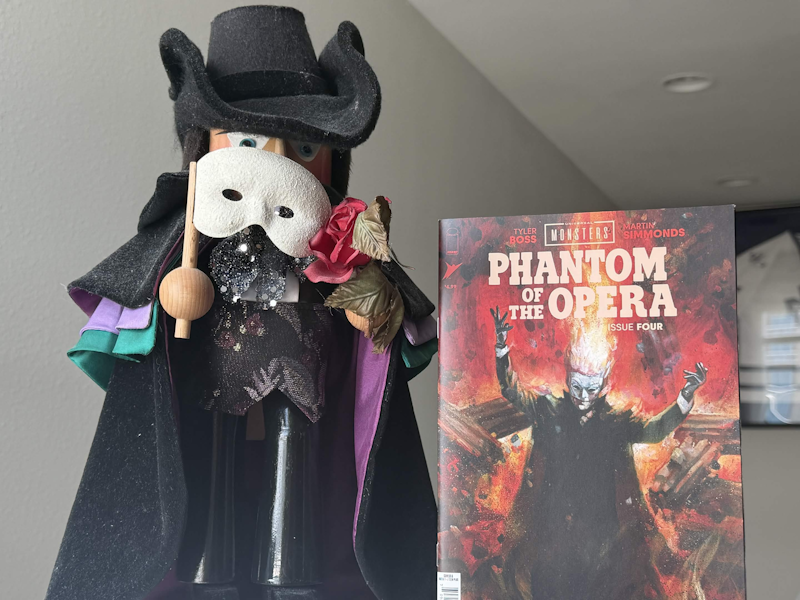
Issues 4 of 4

IMG4114.png


So we're at the finale, the final lair of this four issue miniseries.

We last left off with Erik having brought down the chandelier because Raoul intervened to have Christine replaced as the lead of his opera, Don Juan Triumphant. Raoul had to tend to the carnage, letting Erik go. He proceeds to take Christine through her mirror.
We pick up with Erik leading Christine down an old Communard tunnel to the underground lake.

So in the original book, '25 film, and ALW musical there are two "abductions." The first were Christine learns that the "angel of music" is just a guy, and later unmasks the Phantom, and the second, where Erik forces her to choose between marriage and some sort of calamity.
The '43 movie, which this comic is based on, only has one abduction scene, at the end.

That first abduction scene also has some variation between versions. Christine goes willingly in the '25 movie and ALW musical, but it's a true abduction in the book. The lone abduction in '43 was very much forced as well.

This abduction is, as with much of this series, blending classic elements into the '43 narrative. It's the only abduction, but Christine goes willingly, at first. Erik's dialogue is lifted from the '43 movie, trying to calm Christine and telling her that the dark purifies the music from the opera. Only here it's reframed as Christine willingly going with him, at least at first.
We get another classical departure from '43. In that movie, Erik merely leads Christine across the lake on a walkway. Whereas in the book and other classically-oriented adaptations have him ferrying her across the lake on a boat. That's what we get here. And the classic boat scene, paired with the stunning and otherworldly design of the subterranean catacombs from the 1943 movie in Simmonds' painted gothic art style, is beautiful.

Christine's mood changes when they get to Erik's
lair, which ups the otherworldly vibes with an underground tree (very anime) amidst the catacombs. Erik starts talking about how Christine will stay here... forever. And when Christine gets freaked out and starts talking about how people will notice she's gone, Erik says they can't go back. He dropped the chandelier. He killed Meg Giry and Biancarolli. All so Christine could sing.

Christine breaks down, saying she never asked for this, and that the Phantom has made her a monster.

We cut to Anatole and Raoul. Anatole mentions that Raoul's plan to tease out the Phantom has failed, and the two examine Christine's dressing room. They find a hidden switch that opens the mirror door and head down. I have to admit I like this. There was no hidden mirror door in the 1943 movie, so it's another element to push that story in a direction that's closer to the book and more referential adaptations.
Beyond that though, Anatole and Raoul investigating Christine's mirror and heading down to go look for her after her abduction has some similarities to the Persian and Raoul doing this in the book.

We get back to Christine and Erik. Christine is fully freaked out now, and Erik tries to calm her. He picks up a violin, saying "this always calmed her," and lamenting that his ailment keeps him from playing like he used to. Christine recognizes the tune...

Erik, the Phantom, is her father.

So this is the big reveal, and yeah. It's just the 1943 reveal (which was actually excised from the movie but made it into the supplementary material).
On one hand, it is disappointing that it's what was expected... but in the other hand... it is what it says on the tin. And as a moody adaptation of the 1943 movie, it works quite well.

Christine, realizing the Phantom is her father, yanks his mask off, and Erik's all "NO MY FACE!"

Of course in the book, 1925 movie, and ALW musical, where he's not her father but instead a would be suitor, and born deformed at that, this anger comes from his own self loathing and anger that Christine's curiosity led her to see his true face.
Here, he's a deranged father who doesn't want his daughter to see his acid scarred face.

And it's here we get the full story. Erik left Christine and his wife/her mother, and her mother knew it. The story that he'd died during the Franco-Prussian War was her mother's way of protecting Christine from knowing that her father abandoned them to pursue his music.

Erik goes into an obsessed rant, that her mother didn't understand, and that family merely held him back from greatness. He claimed he was close to being great, but illness (likely arthritis in his playing hand) crippled him. Having his original work, Don Juan Triumphant, published was his last shot at making something of himself as a musician, but when he thought the publisher was stealing from him he killed him, and got scarred with acid in the process. He fled under the opera house, discovered his daughter was an aspiring soprano, and decided to mould her into the perfect star, to achieve greatness through her that he couldn't achieve himself.

In fitting with the rest of this series, it's a moody take on the 1943 movie. In that movie Erique Claudin (I'm calling him Erik here, because they don't give his name, and defaulting to Erik seems appropriate given that this series reverted Christine from her 1943 rename to her classic name) was a kindly old man, who had ambition, yes, but was mostly content to support Christine from afar. He's only really driven to madness after one very bad day that ends with his face scarring.
Here, Erik has always been a bit nuts and obsessed. Which also pushes him in book Erik's direction, even if he's got a different backstory. His story also dovetails nicely with the speech the conductor gave to Christine at the start of this series, that to be a musical great, you have to give up on "normal" things like family and loved ones. Erik is that taken to a dangerous extreme. He abandoned his family to pursue greatness. Even after his life was ruined, he saw meeting his long lost daughter as only another means for greatness.

Christine realizes what this obsession leads to and says that her mother and herself- Erik's wife and daughter- were what mattered and he left them.

It's at this moment that Raoul and Anatole burst in. Raoul pulls a gun, Erik grabs his sword, and Christine tries to separate them. Erik slashes and accidentally cuts Christine's cheek, and Raoul's gun goes off. The gunshot brings the catacombs down, and Christine is pulled away as Erik finally accepts his fate. He's crushed by the rocks and Raoul and Anatole get Christine into the boat just as she grabs his mask. She says goodbye to her father, kisses the mask, and drops it into the water. Where it lands next to Erik's violin.

We cut to one year later. A worker is putting up a poster for the opera Maria (a nice mythology gag, Maria was the opera they were performing at the start of the 1943 movie) and a little girl throws a tomato at it. Christine, holding a suitcase, is walking by and scolds the little girl. The girl says she hates opera, too much romance and kissing.

Christine chuckles and says opera can tell many different stories. Stories of heroes, bravery, adventure, even ghost stories. The girl, intrigued, asks for an example.
Christine tells her the story of a ghost who was trapped by the whims of other ghosts, and didn't know she was living someone else's dream until it was too late. The girl asks if the ghost ever got free, and Christine says no one knows. The girl calls cop out on that, but Christine says mystery is what makes ghost stories intriguing. She's about to step onto a train, before she tells the girl that whatever she does in life, she should do it for herself and not anyone else.

And that's it.

The 1943 movie introduced the plot point of Christine having to choose between Raoul and Anatole, and it's really a golden age of Hollywood romcom... with the plot of The Phantom of the Opera happening in the background. The big twist is that, in the end, Christine chooses her career over both Raoul and Anatole. The two dudes, having both been rejected, decide to go to dinner together instead (giggity).

There was speculation if that was what would happen here... and... yes and no. We don't know if Christine ended up with Raoul or Anatole, neither of them appear once we jump ahead one year.
It seems like Christine has abandoned being an opera star all together. And this ties in to issue three, where she realized she was living her father's dream and not her own. Seeing her father's obsession taken to such an extreme seems to have crystallized that for her. So despite rejecting the opera entirely, this does match 1943 Christine in that she chooses her own desires in the end. It also has hints of book Christine, who left behind the life of an opera star to run back to Sweden with Raoul to live in seclusion.

The final issue felt rushed, and I can't help but think that if this series got one or two more issues, the final lair and climax could have had time to breath a bit. Still, it's a Phantom of the Opera miniseries. It's a miracle this thing exists at all, and rushed or not, it manages to land the plane.

All in all, this took a movie adaptation that strayed from the book and tried to nudge it back closer to the book (and ALW musical in parts) while keeping the structure of the 1943 movie's plot.
I personally thought it worked well. The exercise is intriguing to me, and Boss as a writer and Simmonds as an artist have the chops to pull it off, and they did. I'd not choose the '43 movie as my basis for Phantom personally, but I think they did very interesting stuff with it given that this was the version Universal requested.

I enjoyed it immensely, and I'll be picking up the trade come September.
 

CoffeeHorse

Hanging in there
Staff member
Council of Elders
Citizen
The film's ending didn't have much time to breathe either, so Skybound got that right. It's a bad version of The Phantom of the Opera, but Skybound pretended not to know better and treated it with respect, and that's the fun of it. It's a harmless what-if.

I think there was an opportunity to do more with Erique's lame backstory, but I don't know what I would have advised them to do. The Franco-Prussian War was such a traumatic experience for Paris and a weird part of the Paris Opera House's history. We're left with the oddity that the false story of Erique's disappearance is more intriguing than the reveal.

Skybound probably did the right thing though. Sticking with the film's intended but dropped reveal is something I always want to see with adaptations. The restored material just isn't that interesting in this case.
 

LordGigaIce

Another babka?
Citizen
The film's ending didn't have much time to breathe either, so Skybound got that right. It's a bad version of The Phantom of the Opera, but Skybound pretended not to know better and treated it with respect, and that's the fun of it. It's a harmless what-if.

I think there was an opportunity to do more with Erique's lame backstory, but I don't know what I would have advised them to do. The Franco-Prussian War was such a traumatic experience for Paris and a weird part of the Paris Opera House's history. We're left with the oddity that the false story of Erique's disappearance is more intriguing than the reveal.

Skybound probably did the right thing though. Sticking with the film's intended but dropped reveal is something I always want to see with adaptations. The restored material just isn't that interesting in this case.
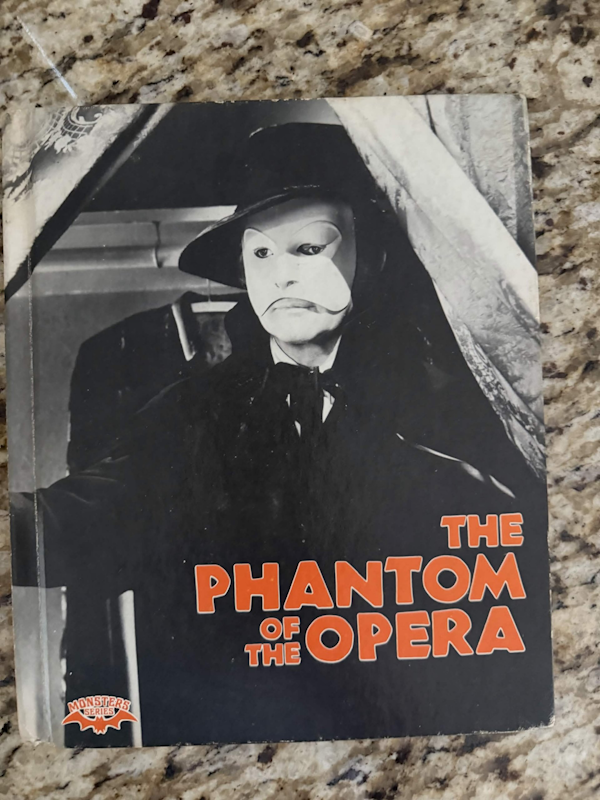
So when I was a kid and falling in love with the ALW score, I found Crestwood House's Monster Series at my school library. They were summaries of major horror franchises at an elementary school reading level to get kids interested in these properties without scaring them too badly. They had one for The Phantom of the Opera, and of course I checked it out like a dozen times. And it's the 1943 movie that it adapted.

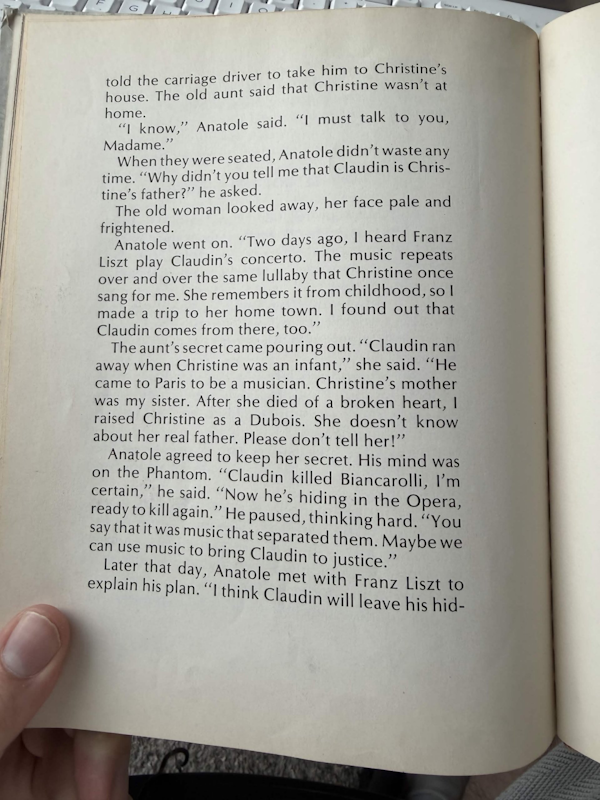
I don't know if it was going off of a rough draft of the script or if whoever did the summary said "screw it, let's ball" because it includes the reveal that Erique is Christine's father.
So I just assumed that was part of the 1943 movie before I ever saw it. And then I saw it... and was so confused until I found out the whole movie was a misadventure that changed like a dozen times on the whims of whatever studio executive happened to be paying attention that week.

The Franco-Prussian War kind of lives on the periphery of Phantom. It's during the Prussian siege of Paris- and the resulting Paris Commune- that book Erik is able to basically set up whatever secret passages he wants in the half finished and temporarily abandoned Paris Opera House.

And then they roll it out here as the reason for Christine's dad's death- so she thinks- until it's like no, he just ran off.
But it begs the question. The area of France they stick Christine and Raoul's hometown in would have been overrun by the Prussians in short order. Clearly there was some local trauma with the war and occupation... so did Erique really get caught in the fighting and decide to just bolt to focus on music? Did he manage to survive with his family only to decide "nah gonna be a composer!"?

Like... you're right. There's an interesting backstory there and how it could play into this... but it's just left as "Christine's mom said he died in the war as a cover for her husband being a doofus."

Honestly? I would have liked it if Erique genuinely thought his wife and daughter died in the war, and they thought he died. Then he tries to pick his life up and later joins the Paris Opera as a violinist, until he sees his thought dead daughter in the chorus and we basically segue into the 1943 movie's plot from there, but no...

Skybound probably did the right thing though. Sticking with the film's intended but dropped reveal is something I always want to see with adaptations. The restored material just isn't that interesting in this case.
Accepting that the 1943 reimagining is a bad version of The Phantom of the Opera and accepting that Skybound was basically forced into using it by Universal...

It's the best thing they could do. I admit I'm a bit peeved because Boss had been promising a twist "you won't see coming" and yeah if someone only knows Phantom via the book or ALW show the twist that THE PHANTOM IS HER DAD??? would be a compelling twist... but I have to think that like 95% of the people spending money on a Phantom of the Opera miniseries know about the 1943 movie and its intended reveal so the twist... isn't really working?
I was thinking they might swerve us with the reveal that her dad really did die in the War and that she may think this guy is her dad, but it's a crazy admirer with a weird face, which would be in line with other changes to the 1943 movie to push it in the book's direction this series made.

Instead, they played it straight. Which... I get it. You gotta work that hype train. Putting aside my self-imposed expectations, and just judging it by what it is and what it tried to do? I like it. It's an adaptation of '43 that tries to keep the book's Gothic mood with some other changes to call back to the book where possible. By committing to the "it's her dad" reveal they patch over the biggest narrative failing of the '43 movie, that being that Erique's obsession with Christine is left nebulous. At least now it all makes sense.

Again, I'd never choose the '43 backstory myself but they did as good a job as possible with it, I think.

But hey. The original novel is public domain. Someone should just try doing a series based on that!
 

CoffeeHorse

Hanging in there
Staff member
Council of Elders
Citizen
So when I was a kid and falling in love with the ALW score, I found Crestwood House's Monster Series at my school library. They were summaries of major horror franchises at an elementary school reading level to get kids interested in these properties without scaring them too badly. They had one for The Phantom of the Opera, and of course I checked it out like a dozen times. And it's the 1943 movie that it adapted.

I don't know if it was going off of a rough draft of the script or if whoever did the summary said "screw it, let's ball" because it includes the reveal that Erique is Christine's father.
So I just assumed that was part of the 1943 movie before I ever saw it. And then I saw it... and was so confused until I found out the whole movie was a misadventure that changed like a dozen times on the whims of whatever studio executive happened to be paying attention that week.

Fascinating. Universal isn't perfect at film preservation but they are crazy good at keeping scripts. It is very likely that Crestwood accessed the script, because Universal absolutely would have it, and they are cooperative with people who want to read these things. Why Crestwood went through the trouble instead of watching the movie, I don't know. I'm not familiar with their work, and now I'm wondering if there's any other deleted material they may have accidentally revealed. I love that sort of thing.

Now I'm thinking about "This man, this thing, is not your father." I wonder if ALW also read the 1943 script, or a summary by someone else who did. If I ever make my long delayed trip to the Universal archives I'll have to join the club and read this thing.

The Franco-Prussian War kind of lives on the periphery of Phantom. It's during the Prussian siege of Paris- and the resulting Paris Commune- that book Erik is able to basically set up whatever secret passages he wants in the half finished and temporarily abandoned Paris Opera House.

When I say I want a definitive annotated edition, this is what I'm talking about. It's a huge part of the backdrop, but Leroux just assumed (justifiably at the time but unfortunately today) that his readers knew all about it. Had Victor Hugo written this book instead, there would be a five chapter digression on it. And people would make fun of him for doing it, but we'd have more faithful adaptations today because there would be no confusion as to what he was talking about.

Like... you're right. There's an interesting backstory there and how it could play into this... but it's just left as "Christine's mom said he died in the war as a cover for her husband being a doofus."

Honestly? I would have liked it if Erique genuinely thought his wife and daughter died in the war, and they thought he died. Then he tries to pick his life up and later joins the Paris Opera as a violinist, until he sees his thought dead daughter in the chorus and we basically segue into the 1943 movie's plot from there, but no...

That would be a hell of an inspiration for his music, and his disenchantment with humanity in general. You just wrote a better 1943 Phantom. The one thing left to figure out would be why he wouldn't immediately reveal himself to Christine after finding out she's alive. Maybe he did something infamous during the Commune period. There's potential.

The funny thing is Universal actually considered something like that early on before someone said "Why don't we just film the book as it is? The Germans did it." Unfortunately they learned the hard way why a faithful adaptation wasn't their first idea. I bet some of that early brainstorming was still in their heads when they decided to try again. 1943 may be a bad Phantom but it is interesting for the decades of trial and error that led to it.

I admit I'm a bit peeved because Boss had been promising a twist "you won't see coming" and yeah if someone only knows Phantom via the book or ALW show the twist that THE PHANTOM IS HER DAD??? would be a compelling twist... but I have to think that like 95% of the people spending money on a Phantom of the Opera miniseries know about the 1943 movie and its intended reveal so the twist... isn't really working?

It's weird. Since the big twist was just restoring the original intent, I'm still wishing they leaned into it even harder and kept the 1943 names. There is value in doing a faithful adaptation that restores some cut material. It's not really what was advertised, but I love that sort of thing. If Skybound is into that, I have a long wish list I'd like them to tackle.
 

LordGigaIce

Another babka?
Citizen
Fascinating. Universal isn't perfect at film preservation but they are crazy good at keeping scripts. It is very likely that Crestwood accessed the script, because Universal absolutely would have it, and they are cooperative with people who want to read these things. Why Crestwood went through the trouble instead of watching the movie, I don't know. I'm not familiar with their work, and now I'm wondering if there's any other deleted material they may have accidentally revealed. I love that sort of thing.
I have pics! I long ago tracked down a copy of Crestwood's The Phantom of the Opera, both as a fan of the property and because this book was such a big part of my childhood. I took a pic of the relevant passage.

IMG3593.png


IMG3637.png


Now I'm thinking about "This man, this thing, is not your father." I wonder if ALW also read the 1943 script, or a summary by someone else who did. If I ever make my long delayed trip to the Universal archives I'll have to join the club and read this thing.
I love that line. I think it's very much needed, to remind people that though Erik is sympathetic, he's a villain, not an anti-hero as you said. He's emotionally manipulated Christine and preyed on her grief.

That would be a hell of an inspiration for his music, and his disenchantment with humanity in general. You just wrote a better 1943 Phantom. The one thing left to figure out would be why he wouldn't immediately reveal himself to Christine after finding out she's alive. Maybe he did something infamous during the Commune period. There's potential.

The funny thing is Universal actually considered something like that early on before someone said "Why don't we just film the book as it is? The Germans did it." Unfortunately they learned the hard way why a faithful adaptation wasn't their first idea. I bet some of that early brainstorming was still in their heads when they decided to try again. 1943 may be a bad Phantom but it is interesting for the decades of trial and error that led to it.
Thanks! There are a few ways to go with it. The first is that he's not emotionally ready. He's spent a decade coping with some form of PTSD and grief from what he thought was losing his family, and suddenly she's alive? He mentally would need time to fully come to terms with it, and it would be easier to just spend money on her singing lessons from afar. That could add to Erique's tragedy. Maybe he's just about to work up the courage to reveal himself to Christine, when he has his one very, very bad day.

Another way is what you said... perhaps the apparent death of his family led to him getting radicalized and doing something brutal during the Commune and he needs to keep a low profile.

Hell, maybe all of it?

Either way, invoking the Franco-Prussian War adds so much potential, I am a bit let down that it was just a cover. I do appreciate the angle of Erique going so mad with obsession to be someone in the world of music that it drove him away from his family, but invoking the War so close to that just makes me wonder what could have been.

It's weird. Since the big twist was just restoring the original intent, I'm still wishing they leaned into it even harder and kept the 1943 names. There is value in doing a faithful adaptation that restores some cut material. It's not really what was advertised, but I love that sort of thing. If Skybound is into that, I have a long wish list I'd like them to tackle.
I wonder if enough people even remember Christine's last name was changed to "DuBoise" in the '43 movie? "Christine Daaé" has pop culture cache thanks to ALW, and I think the change may have just been because that's what people know (even if it makes little sense to restore Christine's Scandinavian surname but keep her '43 French backstory).

I may be reading between the lines here on what Boss has said about this, but I get the feeling his first love for the material is the ALW show, which leans heavily on the book. And that '43 was imposed on him by Universal. And that a lot of this was him trying to wring some ALW and Leroux out of the '43 story. That he kinda pulls it off is impressive.

This has been impressive enough a read for me to want to see what else Skybound has been cooking for their Universal Monster series. I'll have to check out the trades.
 
Last edited:

CoffeeHorse

Hanging in there
Staff member
Council of Elders
Citizen

I may have to hunt this down. It wouldn't be the first time I've bought a book because it's based on a script that isn't otherwise available.

I love that line. I think it's very much needed, to remind people that though Erik is sympathetic, he's a villain, not an anti-hero as you said. He's emotionally manipulated Christine and preyed on her grief.

Also note that Raoul felt the need to say it, as if he hadn't already said it at some point. As if he hadn't been in any hurry to have a "By the way, I found out he's just some former circus freak." conversation.

It seems he respects Christine's mixed feelings enough that he's willing to keep quiet and back off, until point of her being in danger of being abducted again.

There are a few ways to go with it.

Crestwood might have had the answer all along. She was raised a Dubois, but that wasn't originally her last name. So Erique wouldn't immediately realize it's her. He might suspect it, but not have a chance to ask before his very bad day(TM) makes a direct conversation impossible. So he takes the indirect route.

Another way is what you said... perhaps the apparent death of his family led to him getting radicalized and doing something brutal during the Commune and he needs to keep a low profile.

It could be where he became so good at strangulation that he's somehow still able to do it with arthritis. Maybe he was just that mad, but it sure seems like he's had practice.

This has been impressive enough a read for me to want to see what else Skybound has been cooking for their Universal Monster series. I'll have to check out the trades.

I checked out Dracula. It was fantastic and I didn't like it. I wish they did something closer to what they did here: take the Universal movie and restore some cut bits, and add some much needed atmosphere. What they ended up doing is absolutely not that, and there was a missed opportunity there. But it is the most interesting thing done with Dracula in my lifetime.
 

LordGigaIce

Another babka?
Citizen
Also note that Raoul felt the need to say it, as if he hadn't already said it at some point. As if he hadn't been in any hurry to have a "By the way, I found out he's just some former circus freak." conversation.

"He's a genius. He's an architect and a designer. He's a composer, a magician. A genius, monsieur."

"But clearly, Madame Giry, genius has turned to madness."

Wow, Raoul. Why don't you check that "having a face" privilege.

It seems he respects Christine's mixed feelings enough that he's willing to keep quiet and back off, until point of her being in danger of being abducted again.
That's because Raoul is Best Boy, regardless of the slander.

Seriously, he's great. ALW's version probably does him the most justice. But I'd love for a take to really capture his character. Skybound, being limited to the '43 setup, is not that. They try, but it's not that.

I may have to hunt this down. It wouldn't be the first time I've bought a book because it's based on a script that isn't otherwise available.
Word of warning. Don't go to eBay. Apparently I'm not the only elder millennial nostalgic for the Crestwood House books, because they go from anywhere between $200-$500 a book on eBay. Which is insane. But keep your eyes peeled at second hand book stores. That's where I found my copy, and I got it for under $20.

Crestwood might have had the answer all along. She was raised a Dubois, but that wasn't originally her last name. So Erique wouldn't immediately realize it's her. He might suspect it, but not have a chance to ask before his very bad day(TM) makes a direct conversation impossible. So he takes the indirect route.
I really wanted to see the 1943 movie because of that book, but my local Blockbuster didn't have it, and back in the mid 90s that was pretty much your only option. It's not like you could order it online or stream it. So I didn't see the '43 movie until after the 2004 movie, when I was on a Phantom kick and this stuff was more widely available on DVD. And I was just confused when the dad reveal wasn't in it... because that was part of it right? Like I read it... it was there... what happened?
1943 is a bad adaptation of The Phantom of the Opera, but it did have its own story it wanted to tell... and gutting it did that movie no favours. There's a giant dad-shaped hole in the plot that you're just supposed to shrug at and go back to admiring the art direction and musical numbers... which are very well done, admittedly. Maybe that was enough in 1943.

Trying to look at things objectively... having Christine's dad be the Phantom and making him a violinist in the opera's company is a nice nod to book Christine's dad being a violinist.

There are some Phantom adaptations (1962, 1998) where I'm convinced no one on set actually read the book. 1943 at least feels like they read the book and decided to remix everything into a romcom with a Gothic horror plot happening in the background.

It could be where he became so good at strangulation that he's somehow still able to do it with arthritis. Maybe he was just that mad, but it sure seems like he's had practice.
That's another thing. The strangulation scene is a faint hint at the Punjab Lasso. Like... at least it seems like someone had a copy of the book to thumb through.
It's faint praise but like... 1943 might as well be The Godfather compared to 1998.

But yeah... actually working the Franco-Prussian War and Commune into '43 Erique's backstory is such a tantalizing possibility and I'd say Skybound's biggest fault is raising that storybeat and then doing nothing with it.

I checked out Dracula. It was fantastic and I didn't like it. I wish they did something closer to what they did here: take the Universal movie and restore some cut bits, and add some much needed atmosphere. What they ended up doing is absolutely not that, and there was a missed opportunity there. But it is the most interesting thing done with Dracula in my lifetime.
I'm intrigued. I wore out my VHS of the 1931 Dracula so I'm kinda curious to see what they could do with it.
 

CoffeeHorse

Hanging in there
Staff member
Council of Elders
Citizen
That's because Raoul is Best Boy, regardless of the slander.

Seriously, he's great. ALW's version probably does him the most justice. But I'd love for a take to really capture his character. Skybound, being limited to the '43 setup, is not that. They try, but it's not that.

One of the frustrating eternal mysteries of the LA Preview is it may have done Raoul justice. For some reason one of the first fixes they tried was adding a rival suitor. We can only guess why they felt the need to do that, but one conceivable reason is the audience saw Raoul as so obviously the right choice that it killed some of the tension.

Word of warning. Don't go to eBay. Apparently I'm not the only elder millennial nostalgic for the Crestwood House books, because they go from anywhere between $200-$500 a book on eBay. Which is insane. But keep your eyes peeled at second hand book stores. That's where I found my copy, and I got it for under $20.

Imma go to eBay! I have to know.

Oh.

Oh dear.

I really wanted to see the 1943 movie because of that book, but my local Blockbuster didn't have it, and back in the mid 90s that was pretty much your only option. It's not like you could order it online or stream it. So I didn't see the '43 movie until after the 2004 movie, when I was on a Phantom kick and this stuff was more widely available on DVD. And I was just confused when the dad reveal wasn't in it... because that was part of it right? Like I read it... it was there... what happened?
1943 is a bad adaptation of The Phantom of the Opera, but it did have its own story it wanted to tell... and gutting it did that movie no favours. There's a giant dad-shaped hole in the plot that you're just supposed to shrug at and go back to admiring the art direction and musical numbers... which are very well done, admittedly. Maybe that was enough in 1943.

Trying to look at things objectively... having Christine's dad be the Phantom and making him a violinist in the opera's company is a nice nod to book Christine's dad being a violinist.

There are some Phantom adaptations (1962, 1998) where I'm convinced no one on set actually read the book. 1943 at least feels like they read the book and decided to remix everything into a romcom with a Gothic horror plot happening in the background.

I think the production nightmare of 1925 explains everything. It was still recent enough that people at Universal had firsthand memory of the experience, and the sets were still around to keep the legend alive. They may have looked at the book again or at least the 1925 script (which they absolutely do still have, even today), but they remembered the reshoots and the reasons they happened. Anatole is almost certainly based on the rival suitor from one of the reshoots. They remained convinced that they shouldn't even try to present Erique as a suitor, so they went with the dad angle, and then dropped it at the last minute for whatever reason. Universal kinda has a thing for massacring their movies in the editing room.

In fairness to later versions other than 1998, the book was out of print until ALW found a copy at a used book store and exploded it back into popularity. And 1925 was not super easy to get. 1943 was all they had. But they didn't have any insight into the harsh lessons that led Universal to do what they did. It was imitation without understanding why. So adaptation were just a spiraling game of telephone for decades.

I'm intrigued. I wore out my VHS of the 1931 Dracula so I'm kinda curious to see what they could do with it.

Hoo boy.

1931 is a butchered adaptation of a play that was adapted from another play that was loosely adapted from the book. It's an icon but it is a mess.

There's a popular untrue "fun fact" that the Spanish version is superior. It's really not. It's definitely shot with more imagination, and it has additional stuff, and overall the pace and continuity is better. Universal has released the script, and it confirms that the Spanish version represents the original intent while the English version was put in a blender at the last minute for whatever reason Universal loves to do that. So there is a lot that's better. But man, the cast just does not do it. It is an absolute tragedy that Bela is more remembered for parodies of a hallucinated performance he never gave than for his actual performance. He is far and away the best actor in either version. His familiarity with Edward Van Sloan (Van Helsing) from their time playing the roles on stage also helps. It is distractingly obvious that they know each other, and it's a good thing. It adds something to their rivalry that wasn't there in the script, and isn't in the Spanish version.

The plays are also interesting. The latter version is fairly close to the film, but the mostly forgotten earlier version is quite different. Most famously it includes the rarely seen Quincey Morris, though sex-swapped to give another actress something to do. She does keep all the gun-happy yeehawness, so I don't think today's audiences would hate the change. There are many other little differences though. Frustratingly, both versions of play have much more exciting endings than the movie. I don't know how the movie managed that.

Anyway, this leaves a few directions Skybound could have taken that I would have found fun. They could have gone with a generally faithful 1931 adaptation that follows the script like the Spanish version did but keeps Bela's likeness, or they could have adapted one of the plays (preferably the more different first version), or they could have done a hybrid that primarily follows the film but restores some of the more exciting bits from the play.

What Skybound did is not any of that. It is good in its own right, but not what the Universal branding had me wanting.
 

LordGigaIce

Another babka?
Citizen
What Skybound did is not any of that. It is good in its own right, but not what the Universal branding had me wanting.
So having binged the Skybound Universal Monsters series... here's a ranking/my thoughts...

1 Invisible Man
I'll be honest. Universal Monsters are not all created equally in my eyes. My favourite character of that roster is the Phantom of the Opera/Erik, and then Dracula. And then everyone else. Not to say I don't enjoy the others... but a stand alone mini series on, say, the Wolf Man, isn't going to peak my attention. Dracula? Maybe! Phantom? Hell yeah!
I say all of that to say that Phantom probably remains my subjective #1 just because of how familiar I am with Phantom as a story and its various adaptations so I see where the series is pulling from and what it's trying to do, more so than maybe any other of these.
That being said, Invisible Man is probably my "head over heart" pick for the best of these. The movie was a very loose adaption of HG Wells' novel of the same name, and I'm tickled by this series acting as a prequel to the film by mining the Wells novel for pre-film shenanigans. it's also a very deep character study of Griffin as an irredeemable monster through a very inwardly focused narrative. Which I think is absolutely the way to go. A lot of these characters can be viewed sympathetically. Jack Griffin is not one of them. So I appreciate the use of the source novel to fill out Griffin's backstory and the decision to commit to him as a villain. The decision to paint him as a sociopath who wants to be invisible because he's tired of acting like a normal person to fool normal people is genius.

2 The Phantom of the Opera
I've spoken about it at length here so I won't get too wordy about it for this list. The 1943 narrative is far from my favourite take on Phantom, but the decision to ring something that's a bit more Leroux out of it and a bit more ALW is a worthwhile endeavour, IMO. Additionally by committing to the 1943 plan of revealing Erik Erique as Christine's father, they allow this version of the story to fully realize itself. Cutting the dad reveal in the actual movie pretty much nukes the central villain's motivation and leaves the narrative feeling directionless. This fixed it by just going "let's do what this version of the story was meant to do."

I've found that my top two here are from movies that are based on books but varied wildly. Both series attempt to reconcile the base novel with the adaptation in different ways. Invisible Man uses the book as backstory to flesh out its prequel to the movie premise, while Phantom reimagines the movie to be more in line with the book. In the end the evolution of adaptation and how this stuff can be constantly remixed to get to these stories from new angles is fascinating to me and I appreciate both angles 1 and 2 came at things with.

3 The Creature From the Black Lagoon Lives!
I wasn't expecting to like this one this much. I am not a huge Creature fan. I've found the movies fascinating as transition pieces from the classic Gothic Universal Monsters franchises of the early 20th century into the more sci fi based monsters of the 1950s, but that's a conceptual thing. The idea of these films fascinates me, but I've never really been into the Creature itself. A big part of that is I just dig Gothic horror. Give me Dracula's castle or Erik's lair under the Paris Opera House. Give me Frankenstein's monster wandering the Swiss countryside or Larry Talbot contracting an ancient werewolf curse in the backwater of Europe. The Creature is just a bit too... schlocky B movie. Which isn't a bad thing... I like many a schlocky B movie... but it does mean he's not going to rank as high as the other Universal Monsters.
Except... I dug this! This goes the modern Hollywood route of being a legacy sequel to the first movie that ignores the previous sequels. So this is straight up a follow up to the first film from 1954. One reason I'm so high on this is because I feel like this mini series got Creature. As I said, he was sort of a transition into the sci fi horror of the mid 20th century. A big theme in the sci fi horror of that era that was done well was allegory. Godzilla as an allegory for atomic warfare is a great example. And this series treats the creature like that.
Here, we follow a journalist who has survived an attack by a drowning-based serial killer. She'd dedicated to tracking him down and bringing him to justice. Meanwhile Dr. Edwin Thompson from the '54 movie is tracking the Creature. These intersect because the serial killer believes he must become the Creature to achieve his "perfect" form as a killer. Like Godzilla in his first film, the Creature here is just a force of nature. The serial killer and the various obsessed protagonists are just in the wake of what the Creature inspires.
In the end I thought it was clever how this series leaned into the Creature's 50s sci fi horror roots and decided to explore him the way the very best of 50s sci fi horror treated their subjects.

4 Frankenstein
This mini series decides to take the route of being additive. Not a retelling, sequel, or prequel to the original movie, but sort of a "stuff that was happening around the narrative" approach. Which is probably my least favourite approach to take here. It veers too close into modern franchise IP farming where every ounce of unexplored timeline space needs a dedicated story because CONTENT.
That being said... this isn't bad per se. The series names each issue after a body part, and we explore how that body part ended up in Frankenstein's monster. We also have a through character, a kid who saw Dr. Frankenstein and Igor robbing his dad's grave to steal his hands. This kid ends up being our viewpoint character as he sort of bounces around various set pieces from the movie. It's very Beast Wars The Gathering where they tried to tell a story around the animated series without stepping on its toes continuity wise. Again, this isn't my favourite approach of these to take, but I did appreciate the cleverness with the body parts. And seeing the brain jar labeled ABNORMAL made me chuckle. Young Frankenstein, you live on.

5 Dracula
Oh man. Dracula's my number two Universal Monster baddie after Erik and he's all the way down here. The crazy thing is his book is illustrated by the same guy who did Phantom. How's Vlad this low? Well... this series does the same thing Frankenstein does- it approaches the task of telling supplemental material around the original movie, which as I said above, is my least favourite approach to take. Frankenstein had some style though, and Dracula... just sort of plays it straight and it doesn't work.
@CoffeeHorse is right. I'd have much preferred it if they committed to maybe a melding of the English and Spanish scripts, or drawing on the play. Or maybe even do what Phantom did and try to ring some book love out of the original film. Instead all of the problems I mentioned above are here. It's at best bonus content that's not needed to appreciate the original film, and at worst it's awkwardly trying to step around the movie's narrative to tell an additional story that's still part of it's overall tale.
The book takes an angle of exploring the corrupting influence of Dracula. Which is a theme that's always been there... but I feel it's better explored in versions of Dracula that are more book accurate, or going the Nosferatu route. The 1931 Dracula is just sort of its own thing. There are corruption elements there, but it's not really the same sort of exploration.
I suppose it's not too dissimilar to Phantom, which tried to marry the bombastic and charming 1943 movie with the novel's Gothic mood. The difference is that Phantom reinvents the 1943 movie from the ground up to push it in a book accurate Gothic direction. Dracula isn't touching the 1931 movie at all. It's trying to do book accurate "Dracula is the Plague" set pieces and staple them to a movie that very much has a different sort of spin on Dracula and his influence. The series does do some interesting stuff with exploring the conflict between advancing medical science and a "disease" like vampirism that can't be fully explained by science... but it just wasn't working. Too disjointed.

6 The Mummy
Oh boy. This one... is not great. The route this one took was a reinvention of the source movie, like Phantom. Whereas Phantom had a clear goal, however, in pushing its source movie closer to the boom, Mummy sort of goes "I donno let's wing it?"
The retelling focuses the narrative on Helen Grosvenor and her past life, the Egyptian princess Ankhesenamun. The story sets up a very intriguing dynamic. Helen is half British and half Egyptian and doesn't feel wholly accepted into either society. This sets up a conflict when Ankhesenamun's spirit is reawakened in her mind, and the parallels between those conflicts are so obvious... but they don't come up. There never seems to be any genuine conflict between Helen and Ankhesenamun, instead it being played off like Helen having a past life hanging around her head like a gal pal bestie.
This also ends up mitigating the romance angles of the movie. Helen's boyfriend, the archeologist Frank Whemple, is all but sidelined. And Ankhesenamun'a love interest, the titular Mummy, Imhotep, has his relationship with the woman he wishes to resurrect reframed as one of one sided obsession. It's not that Ankhesenamun doesn't love Imhotep, she does... but she takes the position of "I never asked you do all of this murder for me."
The problem is that this is crammed into the last half of the last issue... so much of this book is dedicated to setting up Helen's "daughter of two worlds and therefore no world" dynamic that every other attempt at a theme, be it the Girls Gotta Stick Together stuff, the reduced romance angles, or the dangers of obsession stuff never have room to breath. This comic almost has too many ideas, and doesn't budget its time properly to do most of them any justice.

Anyway that's my take on these. I have to say, I appreciate how Skybound had no set template for this. They're not all reimaginings or supplementary stories or sequels or prequels... they all do their own thing. And that's admirable, even if I didn't jive with all the decisions. Each creative team was allowed to explore the material how they wanted. And we need to see more of that in comics.
 

CoffeeHorse

Hanging in there
Staff member
Council of Elders
Citizen
I'd probably put together a similar list if I cared enough, but I don't. Dracula's the only other one I really care about. Universal's monsters just never did much for me. Frankenstein is fine I guess, but overexposed to the point where I just never want to see those neck bolts again. Lugosi's Dracula hasn't been overexposed the same way. A hallucinated false memory of his performance has been overexposed for sure, but his actual performance has not been. At all. It's a shock to rewatch that movie and remember how good he is.

I suppose a common thread here is I'm a weirdo who read Frankenstein, Dracula, and The Phantom of the Opera before seeing any adaptations of any of them. I have not read The Invisible Man. My school library didn't have that one. They did have War of the Worlds though, and again I read that before seeing any adaptations. Movies cost money and the school library was free, and for some reason there was no competition for the books I wanted to check out.

I'm glad Skybound tried, but yeah. This ain't it. There's still two unexplored niches here. An actual faithful adaptation of Dracula would be neat. Anyone who wants to try it still has the opportunity to be the first, which is sad. If they don't want to do that, 1931 is such a solid alternate template that we really don't need another not-book version. It's enough. 1931 has unforgettable iconography, but there's so much that happens too quickly or entirely offscreen, which means there's obvious room for expansion without losing what we already have. Obviously they could restore the script continuity. They could adapt the strangely more ambitious ending of the play. They could expand the Transylvania act so it's not just one quick night. The Spanish version has an obvious Nosferatu nod in it. They were clearly aware of it. So it's it's possible to borrow a little more from it without losing authenticity to 1931. They could make "The Ultimate Version" of Universal's original intent. They have no idea how happily I'd overpay for that.
 

LordGigaIce

Another babka?
Citizen
I'm glad Skybound tried, but yeah. This ain't it.
Something I realized after getting my thoughts on all of these out "on paper."

The only two of these that follow the same "template" are Dracula and Frankenstein.

Phantom? Reimagine the movie to push its story closer to the book.

Invisible Man? Use the book as a prequel to the movie, and use the opportunity to psychologically examine the main character.

Creature? Use the first movie as a prequel to the comic, ignore the actual sequels.

The Mummy? Reinvent the movie entirely with new themes.

Then we have Dracula and Frankenstein which both opt to just tell... side missions that happen around the original movies. Which is... not nearly as interesting. The Mummy was a mess but at least it tried new stuff with the actual movie.

I just find it interesting that in a creator-driven series like this where both Skybound and Universal seemingly said "do what you want as long as our versions of these characters are used" that Frankenstein and Dracula's authors both opted for this specific uninspired approach.

And it's these two... that's significant. 1913's Jekyll and Hyde may have been the first "Universal Monsters" movie... 1925's Phantom the first with a real pop cultural imprint... but 1931's twin hits Dracula and Frankenstein made Universal Studios what it is today. Not just the Monsters franchise, the whole damn company.
And they pretty much set the pop culture expectations for those characters.

So my theory is that while Universal told everyone else "yeah do what you want, we don't have rules we're gonna hold you to, maaaannn" they specifically told Dracula and Frankenstein's authors that those films were different. They were special, and the events of those films couldn't be reinterpreted or altered in any way. They had to tell side stories AROUND those plots.

I suppose it's possible I'm overthinking it but again... in a series that seems to have so much author-led freedom... it's strange that this approach happens to line up with the two most iconic characters/movies.


Top Bottom