Who's trying to break the internet today?

Ungnome

Grand Empress of the Empire of One Square Foot.
Citizen
I'm really not surprised, but good. Industry is safe for now.

Maybe Microsoft will lobby to overturn the whole thing now that it no longer does anything but annoy their users for no reason while Linux gets a pass.
Microsoft LIKES annoying their users, though. Just look at Windows 11 for proof.
 

Pocket

jumbled pile of person
Citizen
They also know that their users have been worn down to the point where they'll put up with anything. Again, look at the fact that a nonzero number of people willingly use Windows 11 for proof.
 

CoffeeHorse

Hanging in there
Staff member
Council of Elders
Citizen
I willingly use Windows 11... I did have to disable updates for my own sanity though. My first impressions were actually good but they keep breaking stuff.
 

wonko the sane?

You may test that assumption at your convinience.
Citizen
Do enough wrong racism and republicans will rush to their computers to correct you and miss the vote?
 

NovaSaber

Well-known member
Citizen

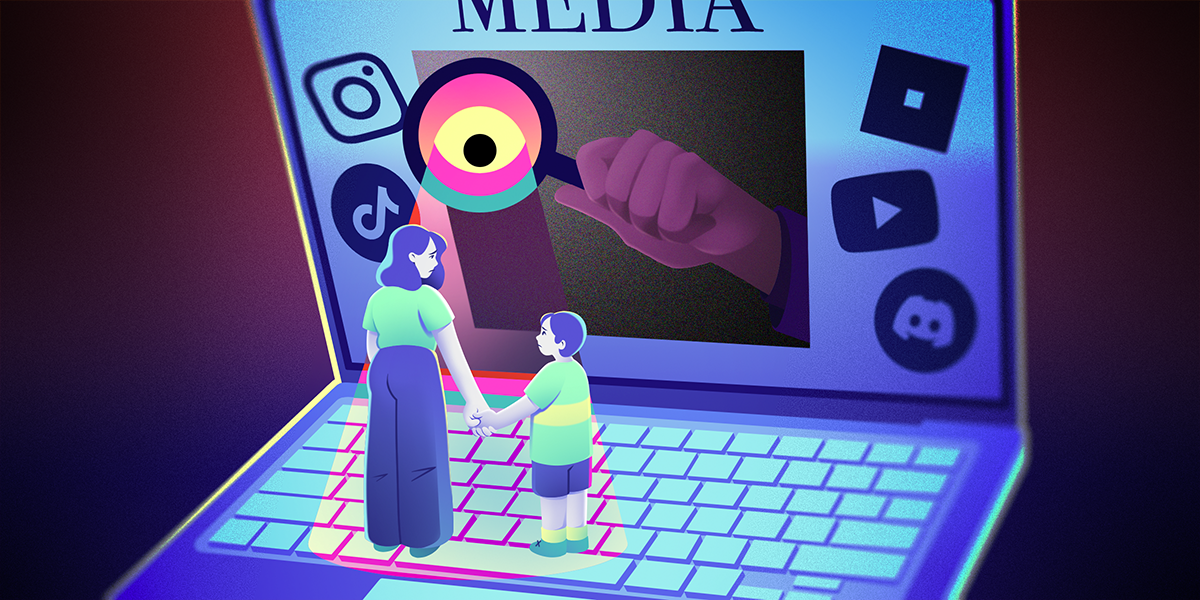
If this sounds complex and like a compliance nightmare, that’s because it is. The access delay comes with privacy-intrusive age verification across the board, relying on the EU age verification scheme. For teenagers, this law means significant control in the hands of their parents, who must set up accounts and prove that they are, in fact, parents, adding yet another problematic layer of verification.

Yet, the law still indiscriminately covers social media and video-sharing, with virtually all mainstream services being covered by the proposal. The broad scope also sits uneasy with the use of age thresholds, which remain a blunt proxy for maturity. What is more, by focusing heavily on safety and harms, the EU Kids Act pays little attention to the privacy and freedom of expression rights of users, as well as the right of children themselves to access information and to participate online. However they’re designed, age gates undermine civil liberties, reduce safety, and create barriers to internet entry, often at the expense of marginalized groups. They also create a powerful infrastructure for control and further entrench the power of big tech.


The proposal exempts not-for-profit encyclopedias, scientific repositories and educational services, as well as open-source software-developing and-sharing platforms. However, no exceptions are foreseen for small and medium-sized enterprises, which will only foster the dominance of resource-laden tech companies that were already investing in similar measures. And we know that most companies are well-advised to play it safe and use privacy-unfriendly age checks across their platforms.



The text defines covered online games broadly: any game playable on a computer, mobile device or console, whether the underlying software runs locally or remotely or arrives on a durable medium, and whether the service is free, paid or hybrid with in-service purchases. Games accessible or purchasable exclusively through physical media, with no online component enabling their access, distribution or purchase, are not considered online games.

Self-declared age is explicitly insufficient under the proposal; access must be gated by certified age verification. Checks run through certified solutions independent of platforms, including a free EU age verification app and, in time, the European Digital Identity Wallet, using zero-knowledge-proof technology that tells the platform only whether a user is above or below the age threshold. Every Member State must offer at least one free way to prove age.

Requiring the EU member states to provide it themselves for free is the only way this doesn't involve trusting random corporations with your ID.
(Supposedly Microsoft was working on a system where you can verify your ID with Microsoft and anything else running on Windows will just trust what age bracket Windows tells them the user is in, but who knows whether that would even be sufficient with this EU law that explicitly requires app stores to verify too?)

Huh, and would this apply to people outside the EU buying from digital stores in the EU?
GoG is in Poland.
 

Ceir

Well-known member
Citizen
In a much smaller complaint, Google, you want me to do what, now as a verification method for my account? No thank you, I will continue putting in my password as I have for the last, oh, twenty years.
 

CoffeeHorse

Hanging in there
Staff member
Council of Elders
Citizen
Don't elect me in a write-in campaign. But if you do, I'm not going to be against all efforts to regulate the internet. There are some regulations I will support, and if they're passed I will enforce them with medieval zeal.

One will be the end of this "Give us your location now and start an order or you are not allowed to even look at our menu" crap. No exceptions. Your website goes offline until it's fixed.
 

Anonymous X

Well-known member
Citizen
I support regulating the internet in theory. Just most of the ways it’s ever been enacted have been over-reach or counterproductive or an extra layer of irritation to the end-user that treats them guilty until proven innocence. Often the equivalent of (roughly speaking) requiring a couple of IDs and a pile of bank statements just to enter your local Tesco.

It’s telling that it feels like a strike on a Russian state centre has done more to abate misinformation on the social media platforms than anything that any government in the democratic world has so far put into law.
 

wonko the sane?

You may test that assumption at your convinience.
Citizen
Ultimately that's because the laws in the disparate countries are trying to regulate regular people from seeing the misinformation, not stop the misinformation. When you can't actively deal with the source of the problem AND the problem gets worse literally every day... incompetent systems like governments will do some patently stupid jive just to prove they still have means.
 

NovaSaber

Well-known member
Citizen
Don't elect me in a write-in campaign. But if you do, I'm not going to be against all efforts to regulate the internet. There are some regulations I will support, and if they're passed I will enforce them with medieval zeal.

One will be the end of this "Give us your location now and start an order or you are not allowed to even look at our menu" crap. No exceptions. Your website goes offline until it's fixed.
I'm okay with the location part if prices vary by location, but yes, if I'm looking at a menu online, it's usually either because I want to check the prices and/or ingredients of something for a place I am going to order at in person, or because I want to browse the entire menu of a place I've never been to before and am going to in person.
Not to order online. The only food I ever order online is pizza.

On the subject of location, actually, it really bugs me that ads know my location enough that I see stuff for local businesses on global websites, yet the sites of businesses themselves keep forgetting what I explicitly told them to use as my local store when I'm not logged in (which is most of the time if the reason I'm there is anything other than to order it online; for example, Walmart tells you what aisle something is on, which should be a very useful feature...but it's not useful when it thinks your nearest store is a completely different one from the one you're going to).
 

CoffeeHorse

Hanging in there
Staff member
Council of Elders
Citizen
It gets tedious for me because my devices do not report my real location. My phone currently thinks it's in Toronto.
 

wonko the sane?

You may test that assumption at your convinience.
Citizen
Don't eat the poutine. I mean, fries, cheese and gravy are always fine: but toronto just can't do it RIGHT.
 

Pocket

jumbled pile of person
Citizen
I would also make it illegal for any site with a public URL to paywall anything. I'm sick of following a link and ending up on a site the person who linked to it just forgot they were having to pay for. Shunt that garbage off onto dedicated apps with no address bar.
 
Top Bottom